
The Story of Champon and Sara Udon
A Taste of Nagasaki’s Cultural Exchange
If you visit Nagasaki, there are two dishes you simply cannot miss: Champon and Sara Udon.
These are not just local specialties. They are edible stories of Nagasaki’s unique history as an international port city.
The Birth of Champon
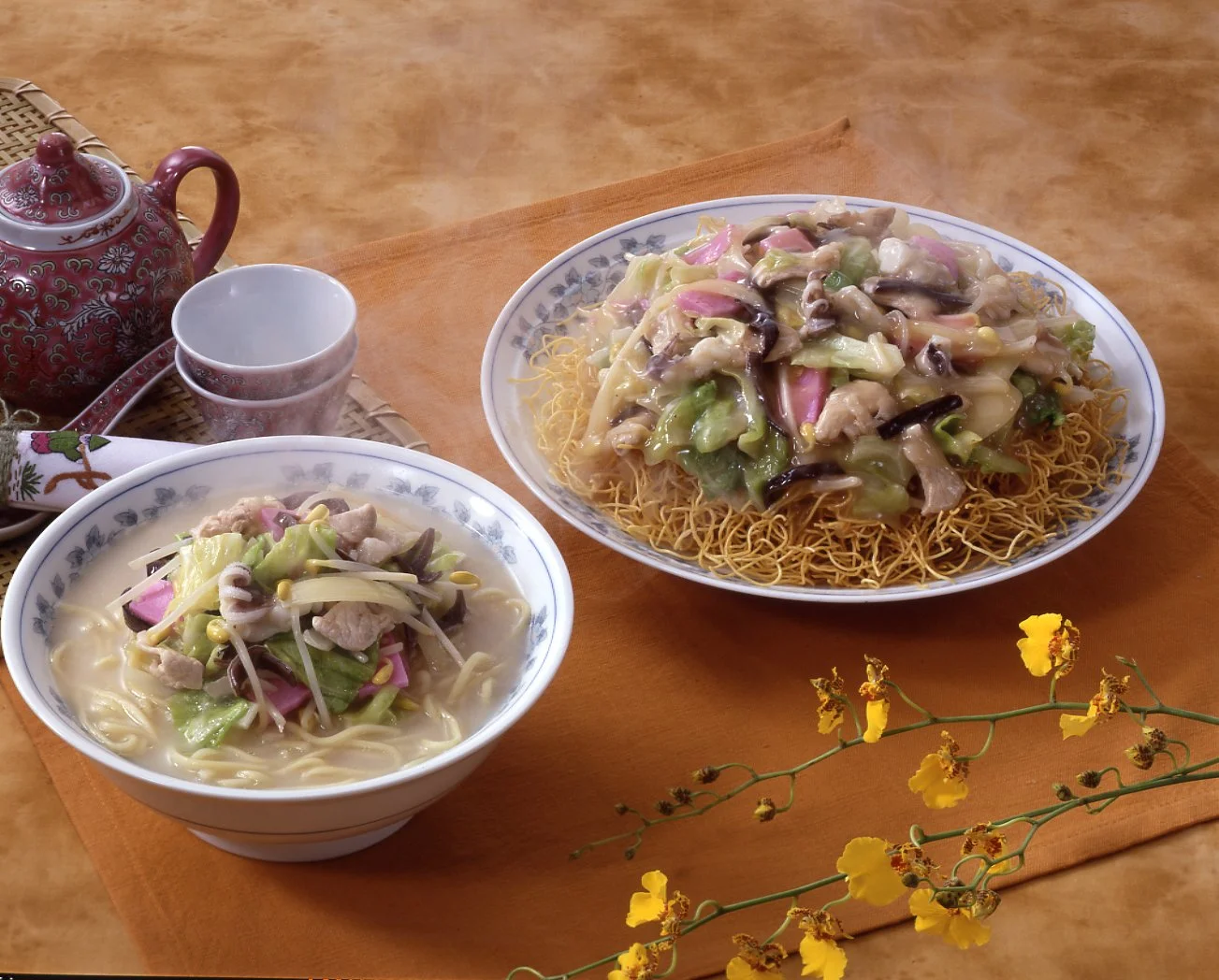
Champon was created in 1899 at Shikairo, a Chinese restaurant in Nagasaki’s Chinatown. The founder, Chin Heijun, was originally from Fujian Province in China. At the time, many Chinese students were living in Nagasaki. He wanted to provide them with an affordable yet nutritious meal. Champon combines a rich pork-and-chicken broth with generous amounts of vegetables, seafood, and thick noodles. Unlike ramen, the noodles are simmered directly in the soup together with the ingredients, creating a hearty, well-balanced dish. The name is believed to come from a Fujian dialect word meaning “to eat a meal.”
The Evolution into Sara Udon
Sara Udon later developed as a variation of Champon. Because soup-based noodles were not convenient for delivery, a drier version was created. Today, Sara Udon is typically made with crispy thin noodles topped with a thick, savory sauce filled with vegetables and seafood. There is also an older version using thicker noodles that are pan-fried rather than deep-fried. If Champon is about simmering everything together, Sara Udon is about layering and texture.
A Reflection of Nagasaki’s History
For centuries, Nagasaki was Japan’s gateway to the world. It maintained trade relations with China and the Netherlands even during Japan’s period of isolation. As a result, different cultures blended here in unique ways. Champon and Sara Udon are perfect examples of that fusion — Chinese roots adapted to Japanese tastes, born in a city shaped by international exchange. When you take a bite, you are tasting more than just noodles. You are experiencing a piece of Nagasaki’s global history.