
The Samurai Who Helped Change Japan
Nagasaki is closely connected to the story of Sakamoto Ryoma, one of Japan’s most influential historical figures. Visiting the places associated with Ryoma allows travelers to experience the dramatic period when Japan began opening to the world and moving toward modernization. Sakamoto Ryoma (1836–1867) is one of the most fascinating figures in Japanese history. Born into a samurai family in Tosa (modern-day Kochi Prefecture), Ryoma became a visionary leader who helped guide Japan from a feudal society into the modern world. In the mid-19th century, Japan was going through a dramatic period of change. After more than two centuries of isolation, the country began opening its doors to international trade and diplomacy. During this time, Nagasaki played a crucial role as Japan’s gateway to the outside world. For centuries, Nagasaki had been Japan’s main window to foreign cultures and ideas. Even during the period of national isolation, limited trade with the Dutch and Chinese continued through Nagasaki. Because of this, the city became a center of new knowledge, technology, and international influence. Sakamoto Ryoma recognized the importance of this port city. In 1865, he established Kameyama Shachu in Nagasaki, often considered Japan’s first modern trading company. The organization was not only involved in commerce but also played an important political role during this turbulent period. Through Kameyama Shachu, Ryoma and his associates facilitated trade, gathered resources, and helped build networks among powerful domains. These connections eventually helped lead to the formation of the historic Satsuma–Choshu Alliance, a key step toward the Meiji Restoration that transformed Japan into a modern nation. Today, visitors to Nagasaki can explore places connected to Ryoma’s life and legacy. Walking through the city offers a glimpse into the atmosphere of the late Edo period, when young reformers like Ryoma looked beyond Japan’s borders and dreamed of a new era.
Places to Visit Related to Sakamoto Ryoma in Nagasaki
Kameyama Shachu Memorial Museum
This museum stands near the site where Ryoma founded Kameyama Shachu, Japan’s first modern trading company. The building offers insight into Ryoma’s vision and the activities that helped shape Japan's future.
Kazagashira Park
Kazagashira Park features one of the most famous statues of Sakamoto Ryoma. From the hilltop, visitors can enjoy panoramic views of Nagasaki Harbor—the same harbor Ryoma once looked out over while imagining Japan’s future.
Dejima
Although Ryoma did not live here, Dejima played an important role in the international trade that influenced Japan’s modernization. Visiting Dejima helps travelers understand the global connections that shaped Ryoma’s thinking.
Glover Garden
Glover Garden reflects the strong foreign influence present in Nagasaki during Ryoma’s time. Western merchants and traders living here contributed to the cultural and technological exchange that transformed Japan in the late Edo period.
If you are interested in Japanese history, following the footsteps of Sakamoto Ryoma in Nagasaki offers a fascinating journey into the moment when Japan stepped onto the world stage.
Goto Islands
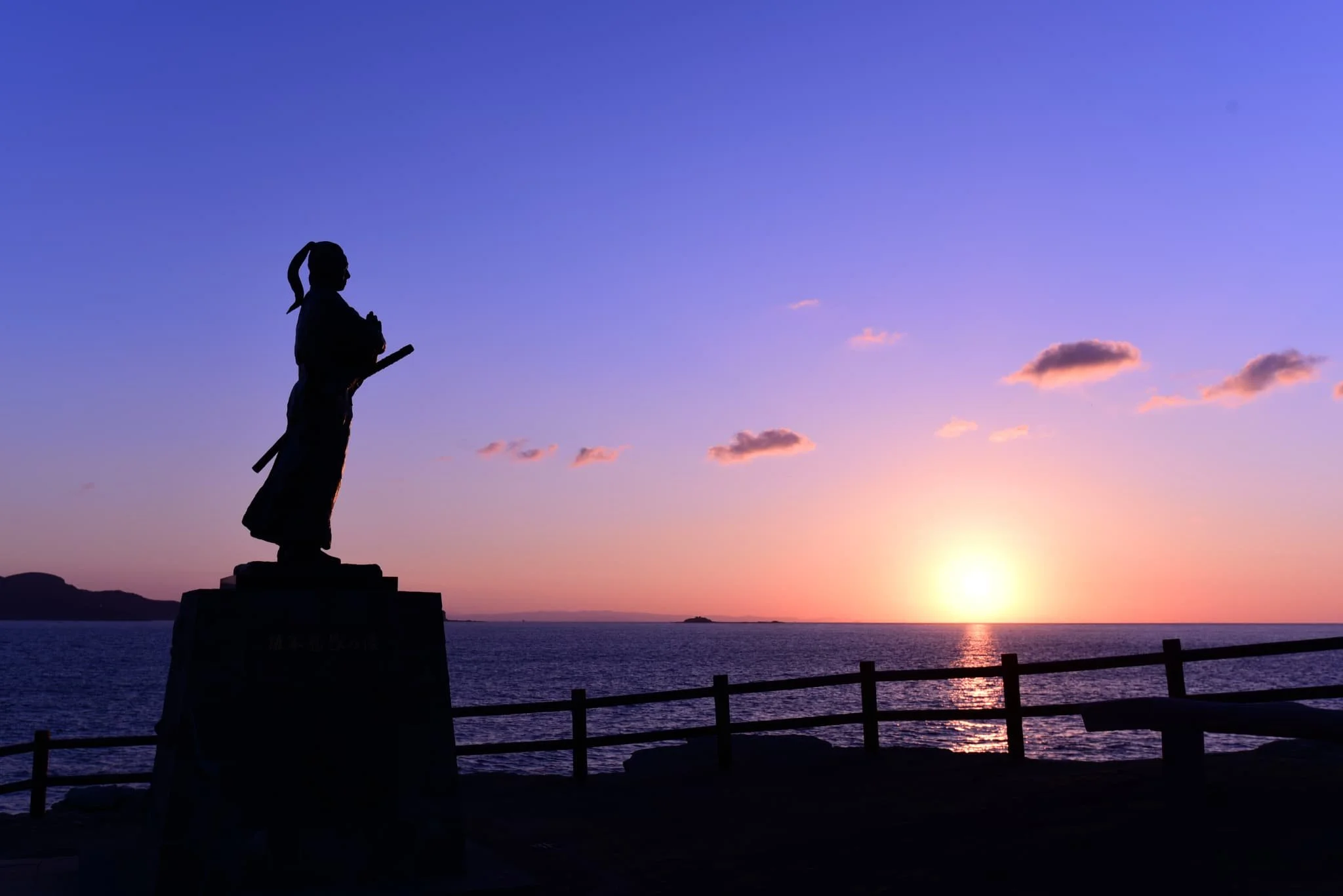
The Goto Islands are also connected to the story of Sakamoto Ryoma. A statue of Ryoma stands on Hisaka Island, facing the open sea. The statue symbolizes Ryoma’s vision of a Japan connected to the wider world through maritime trade.